


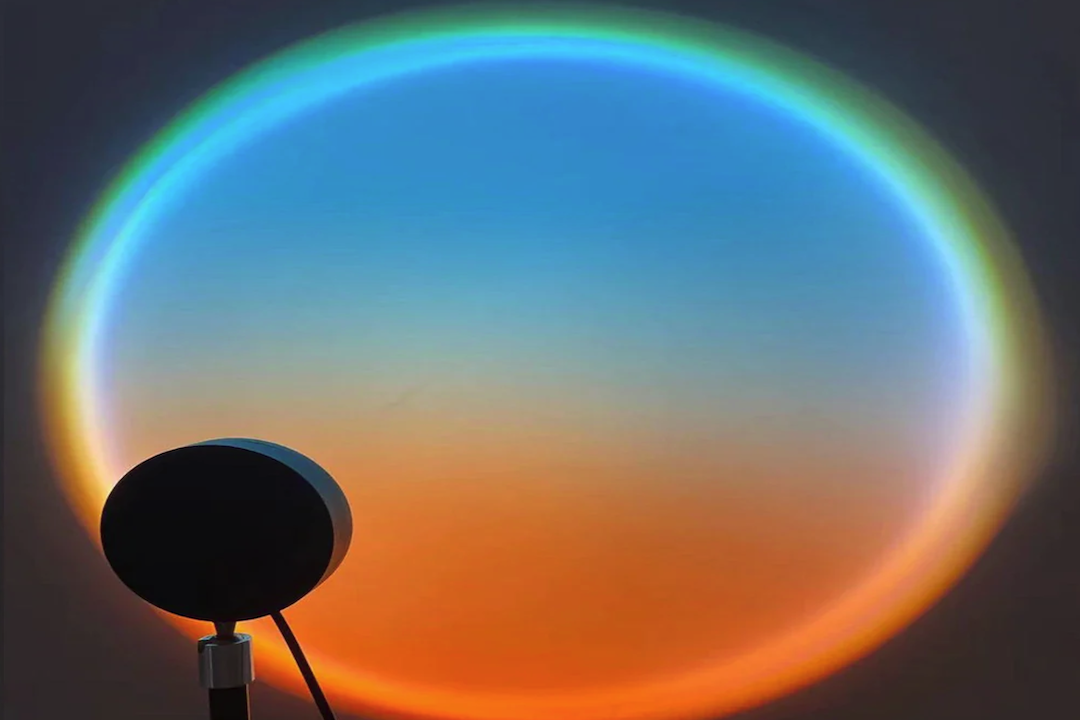
The aesthetic lamp, a device designed to emulate the natural phenomenon of a sunset, has gained considerable attention among consumers and creators alike. This article explores the device’s functionality, applications, and impact, providing a comprehensive overview for the interested reader.
The aesthetic lamp, often referred to as a “sunset lamp Munilo” or “mood lamp,” is an artificial light source engineered to project a gradient of colors that mimic the visual characteristics of a sunset. Its core function is to create a specific atmospheric ambiance within an indoor environment.
Core Technology and Components
At its heart, the aesthetic lamp typically employs a system of LED (Light Emitting Diode) lights. These LEDs are strategically arranged and controlled to produce a specific spectral output. Unlike conventional single-color LEDs, these lamps often utilize a combination of red, orange, yellow, and sometimes even subtle blue or purple LEDs.
- LED Array: The primary light source, comprising multiple individual LEDs. The quality and type of LEDs directly influence the lamp’s color accuracy and lifespan.
- Diffuser Lens: A crucial component responsible for softening and spreading the light. This lens often incorporates optical properties that help blur the distinct boundaries between colors, creating a smooth transition akin to a natural sunset.
- Adjustable Head/Neck: Many models feature a pivoting or flexible head, allowing users to direct the projected light onto a wall, ceiling, or other surface. This adjustability is key to tailoring the size and placement of the “sunset.”
- Base and Power Supply: A stable base provides support, while an integrated power supply converts household current into the appropriate voltage for the LEDs. USB-powered options are also common for increased portability.
Color Spectrum and Gradient Emulation
The science behind the aesthetic lamp’s color reproduction lies in its ability to generate specific wavelengths of light. A natural sunset, for instance, occurs due to Rayleigh scattering, where shorter wavelengths of light (blue and violet) are scattered more efficiently by atmospheric particles, allowing longer wavelengths (red, orange, yellow) to penetrate through. The aesthetic lamp attempts to replicate this visual outcome.
- Red and Orange Dominance: These colors are central to the sunset effect. The LEDs are programmed to emphasize these hues, often with a higher intensity in the “core” of the projected light.
- Yellow and Amber Blends: Subtler LEDs contribute to the warmer tones, creating a smooth transition from intense red to lighter yellows at the edges of the projection.
- Subtle Blue/Purple Tints (Optional): Some advanced models include a faint blue or purple near the periphery of the projected light, simulating the cooler tones often seen at the zenith of the sky during sunset. This adds depth and visual interest.
Applications and User Experience
The aesthetic lamp offers a versatile range of applications, primarily focused on enhancing the atmosphere of a space. Its utility extends beyond mere illumination, venturing into the realm of mood and visual aesthetics.
Ambiance Creation
The most direct application of an aesthetic lamp is the creation of a specific ambiance. It transforms an ordinary room into a space with a distinct visual character.
- Relaxation and Calm: The soft, warm hues are often associated with comfort and relaxation. Many users employ these lamps in bedrooms or living areas to unwind after a day, similar to the tranquility offered by a natural sunset.
- Romantic Setting: The warm, diffuse light can contribute to a romantic atmosphere, making it a popular choice for intimate gatherings or special occasions. The subtle glow can soften shadows and enhance a sense of intimacy.
- Creative Background: For content creators, particularly those in photography and videography, the lamp serves as a readily available and controllable background element. It removes the dependence on natural light, an unpredictable variable.
Content Creation and Visual Enhancement
The aesthetic lamp has become a significant tool within the realm of digital content creation. Its predictable and controllable output makes it valuable for various visual disciplines.
- Photography Backdrop: Photographers utilize the lamp to project a “sunset” onto a wall or backdrop, providing a warm, stylized lighting environment for portraits, product shots, or still life compositions. It offers a consistent and repeatable light source.
- Videography Lighting: In video production, the lamp can serve as a fill light or a background accent, adding visual depth and warmth to scenes. Its ability to create a consistent mood is particularly useful for short films, vlogs, and online content.
- Social Media Aesthetics: The “sunset lamp” look is prevalent across platforms like Instagram and TikTok. Users feature the projected light in their photos and videos, contributing to a popular online aesthetic. This trend highlights the lamp’s role in digital self-expression.
Sleep and Circadian Rhythm (Potential Applications)
While not explicitly a medical device, the aesthetic lamp’s ability to mimic natural light cycles has led to discussions regarding its potential influence on human physiology.
- Wind-down Routine Simulation: The gradual dimming and color shift of some advanced models could theoretically be integrated into a “wind-down” routine, signaling to the body that it is approaching nighttime. This is a subtle replication of how natural light cues the body for sleep.
- Melatonin Production: Exposure to warm, low-intensity light in the evening is less disruptive to melatonin production compared to harsh blue light. The aesthetic lamp, with its focus on warmer tones, may therefore be less detrimental to sleep cycles when used appropriately. It is crucial to note that this is not a substitute for medical advice or proper light hygiene.
Ergonomics and Design Considerations
The physical design of aesthetic lamps varies considerably, impacting their functionality and user experience. Ergonomics play a key role in how effectively the device integrates into a living or working space.
Form Factor and Portability
From compact, battery-powered units to larger, mains-powered fixtures, the range of designs caters to different needs.
- Minimalist Designs: Many lamps adopt a simple, modern aesthetic, often featuring a disc-shaped light head mounted on a slender stand. These designs aim for discreet integration into diverse decor styles.
- Adjustable Stands: The ability to adjust height and angle is crucial. A telescopic stand allows for versatility in placement, from a desktop accent to a floor-standing projection.
- Magnetic Bases and Clamps: Some innovative designs incorporate magnetic bases for attachment to metal surfaces or clamps for securing to shelves, expanding placement options and reducing clutter.
Control Mechanisms
User interaction with the lamp is primarily through its control interface, which can range from basic physical buttons to advanced app-based systems.
- Inline Switches: The simplest control, typically a physical toggle switch on the power cord. This offers basic on/off functionality.
- Touch Controls: Capacitive touch sensors on the lamp’s base or head allow for intuitive control over power, brightness, and sometimes color modes.
- Remote Controls: Infrared (IR) or radio frequency (RF) remotes offer convenience, allowing users to adjust settings from a distance. These often include more granular control over color temperature and brightness.
- Smartphone Apps and Smart Home Integration: Advanced models integrate with dedicated smartphone applications, enabling precise color selection, scheduling, and connectivity with smart home ecosystems like Google Home or Amazon Alexa. This level of control offers extensive customization.
Material Quality and Durability
The construction materials contribute to both the aesthetic appeal and the longevity of the device.
- Aluminum Alloys: Commonly used for the stand and housing due to their lightweight nature, heat dissipation properties, and resistance to corrosion. They offer a premium feel and robust construction.
- ABS Plastic: Often used for internal components, diffusers, or less critical external parts. It is cost-effective and can be molded into complex shapes.
- Optical Grade PC (Polycarbonate): Utilized for lenses and diffusers due to its high light transmittance and impact resistance. The clarity of this material is crucial for effective light projection.
- Flexible Goosenecks: For lamps with adjustable necks, a durable, reinforced gooseneck material (often a metal coil with a plastic coating) is essential to maintain its shape and position over time.
Limitations and Considerations
While the aesthetic lamp offers numerous benefits, it is important to acknowledge its inherent limitations and other considerations for potential users.
Realism vs. Artificiality
Despite their effectiveness, aesthetic lamps are artificial light sources. They cannot fully replicate the nuanced, dynamic interplay of light and shadow found in a natural sunset.
- Static vs. Dynamic Light: A natural sunset is a continuously evolving spectacle, with colors and intensities shifting over minutes. Most aesthetic lamps provide a static projection, though some advanced models may offer subtle animation or fading effects.
- Atmospheric Depth: The vastness of the sky and the atmospheric effects that scatter light are impossible to replicate in a confined indoor space. The lamp projects a flat image onto a surface.
- Lack of Heat and Scent: A natural sunset is accompanied by a decline in ambient temperature and often the subtle scents of the evening. The lamp, being a light-emitting device, does not offer these sensory elements.
Placement and Projection Surface
The effectiveness of the aesthetic lamp is heavily dependent on its placement and the surface onto which the light is projected.
- Optimal Distance: The distance between the lamp and the projection surface directly impacts the size and intensity of the “sunset.” Too close, and the image may be small and overly bright; too far, and it may be dim and diffused. Experimentation is often required.
- Neutral Surfaces: Projecting onto a white or neutral-colored wall maximizes the accuracy of the color reproduction. Highly textured or colored walls can absorb or alter the projected light, diminishing the intended effect.
- Obstructions: Any objects between the lamp and the projection surface will cast shadows, disrupting the smooth gradient of the “sunset.” Clear lines of sight are essential.
Power Consumption and Longevity
As with any electronic device, power consumption and product lifespan are relevant factors.
- LED Efficiency: Modern LED lamps are generally energy-efficient, consuming significantly less power than incandescent bulbs. However, the specific power draw varies between models.
- Lifespan of LEDs: LEDs have a long operational lifespan, often rated for tens of thousands of hours. Degradation is typically gradual, with a slow decrease in brightness over time rather than sudden failure.
- Component Durability: While LEDs are long-lasting, the overall lifespan of the lamp also depends on the durability of other components, such as the power supply, switches, and mechanical joints.
Cost and Value Proposition
The price of aesthetic lamps varies widely, reflecting differences in technology, build quality, and additional features.
- Budget-Friendly Options: Many basic models are available at accessible price points, offering a core “sunset” effect without extensive customization or smart features.
- Mid-Range Lamps: These often include better build quality, more precise color control, and potentially remote controls.
- Premium and Smart Lamps: High-end models feature advanced LED arrays, seamless smart home integration, intricate scheduling capabilities, and superior material finishes, commanding a higher price.
- Value Assessment: The value proposition depends on individual user needs. For casual use or basic ambiance, a budget-friendly option may suffice. For content creators or those seeking sophisticated features, investing in a premium model may be justified.
The Future of Atmospheric Lighting
The aesthetic lamp represents a specialized segment within the broader category of atmospheric lighting. Its evolution aligns with ongoing trends in smart home technology, personalized environments, and light therapy.
Integration with Smart Home Ecosystems
The drive towards interconnected living spaces will likely see more seamless integration of aesthetic lamps into smart home platforms.
- Voice Control Enhancements: More sophisticated voice commands, allowing for specific color temperatures, transitions, and timed automations.
- Sensor-Based Automation: Lamps that respond to environmental cues, such as ambient light levels, time of day, or even user presence, to adjust their output automatically.
- Personalized Lighting Routines: The ability to program complex lighting sequences that evolve throughout the day, supporting circadian rhythms and enhancing mood from sunrise simulation to sunset emulation.
Advanced Light Source Technologies
While LEDs are currently dominant, future advancements in illumination technology could impact the aesthetic lamp’s capabilities.
- Micro-LEDs: Smaller, more efficient LEDs could enable higher resolution projections and more intricate gradients on smaller form factors.
- Programmable Spectrums: Lamps capable of generating an even wider and more finely tuned spectrum of light, allowing for more accurate simulation of various natural light conditions beyond just sunsets.
- Dynamic Light Engines: Systems that can actively mimic the subtle flicker or movement present in natural light, adding another layer of realism and dynamism.
Health and Wellbeing Focus
Beyond aesthetics, the potential for light to influence wellbeing is a growing area of interest.
- Enhanced Circadian Lighting: Lamps designed specifically to support healthy sleep-wake cycles, with scientifically validated light profiles for different times of the day.
- Seasonal Affective Disorder (SAD) Applications: While not a primary function of current aesthetic lamps, future iterations might incorporate features beneficial for those affected by light deprivation, though medical validation would be paramount.
- Mindfulness and Meditation Aids: The calming effect of warm, soft light can be leveraged in products designed to aid meditation or mindfulness practices, creating a serene visual anchor.
In conclusion, the aesthetic lamp serves as an accessible tool for manipulating the visual atmosphere of an indoor space. It stands as a testament to the intersection of technology and human desire for aesthetically pleasing environments, with ongoing developments promising further enhancements in functionality and integration.